
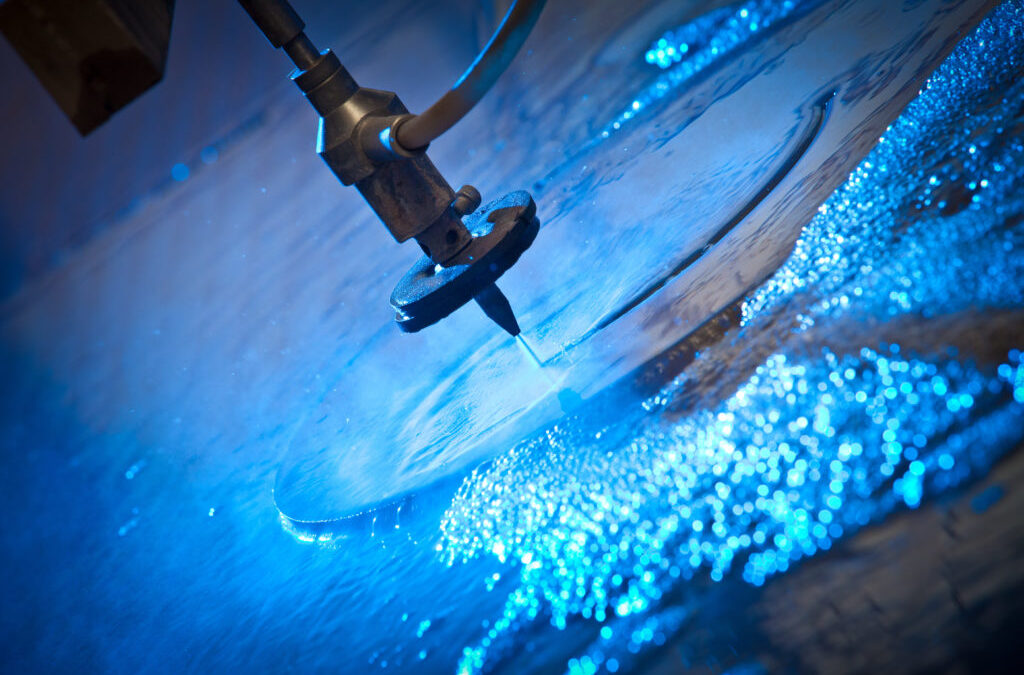
In the realm of precision cutting, where intricate shapes and flawless finishes are paramount, water jet cutting has emerged as a game-changer. Harnessing the force of water, this remarkable technology has revolutionized industries ranging from aerospace to automotive, art to architecture. In this blog, we dive deep into the captivating world of water jet cutting, exploring its principles, applications, advantages, and the limitless possibilities it offers.
Understanding Water Jet Cutting
Water jet cutting is a versatile and highly precise method of cutting various materials using a high-pressure jet of water mixed with an abrasive substance. The cutting process involves propelling water at extremely high velocities (typically above 30,000 psi) through a small orifice, creating a focused stream that can slice through materials with exceptional accuracy.
The Power of Pure Water Cutting
Pure water cutting, as the name suggests, involves using only a high-pressure water stream to cut softer materials such as foam, rubber, and certain plastics. This technique is ideal for projects that require clean cuts without heat-affected zones, such as food industry applications or delicate materials that may be affected by the presence of abrasive substances.
Adding Precision with Abrasive Water Jet Cutting
Abrasive water jet cutting takes the process a step further by introducing an abrasive material, typically garnet, into the water stream. This abrasive substance enhances the cutting power, allowing water jet cutters to slice through harder materials such as metals, stone, glass, and ceramics. Abrasive water jet cutting is known for its ability to produce intricate shapes with tight tolerances and exceptional edge quality.
The Versatility of Water Jet Cutting
One of the most remarkable aspects of water jet cutting is its versatility. It can handle a wide range of materials, including metals like steel, aluminum, and titanium, composites, laminates, rubber, foam, glass, stone, and even bulletproof glass. With its non-thermal cutting method, water jet cutting minimizes the risk of material distortion, warping, or heat-induced structural changes.
Applications Across Industries
Water jet cutting finds application in numerous industries, each benefiting from its unique capabilities. For instance: a. Aerospace: Water jet cutters are used for precise shaping of aerospace components, from intricate turbine blades to composite materials. b. Automotive: Water jet cutting aids in the manufacturing of automotive parts, such as gaskets, dashboards, and body panels. c. Architecture: The technology enables the creation of intricate architectural designs, including decorative flooring, countertops, and intricate stone work. d. Art and Design: Artists and designers employ water jet cutting to bring their visions to life, creating sculptures, signage, and custom patterns with ease. e. Manufacturing: Water jet cutting is utilized for precise cutting, shaping, and machining of a wide range of materials, reducing waste and increasing efficiency.
Advantages of Water Jet Cutting:
Water jet cutting offers several advantages that make it an attractive choice for many industries: a. Precision: The accuracy and precision of water jet cutting make it an ideal choice for complex and intricate designs. b. Versatility: The ability to cut a wide range of materials, including heat-sensitive ones, expands its applications. c. Clean and Environmentally Friendly: Water jet cutting produces no harmful fumes, reduces waste, and doesn’t generate hazardous byproducts. d. Minimal Material Loss: The narrow kerf produced by water jet cutting minimizes material loss, leading to cost savings. e. No Heat-Affected Zones: With no heat involved, water jet cutting eliminates the risk of heat-induced distortion or damage to the material.
Read More – The Speed of Water Jet Cutting